

In this guide
Do chickens need washing?
Most healthy chickens maintain their feathers through preening and dust-bathing. A dry dust bath, clean bedding and sensible housing usually matter more than routine baths. Full-body washing can cause stress or chilling and is not a treatment for parasites.
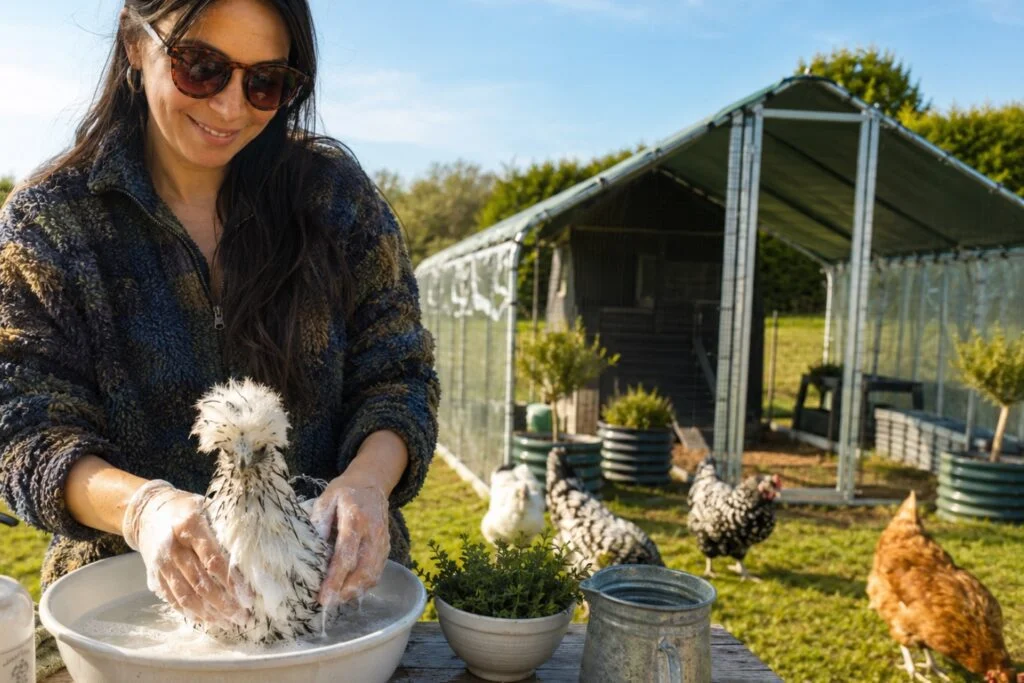
When cleaning may be necessary
Local soiling, a contaminated substance or persistent dirt may need attention. Ask a poultry-experienced veterinarian or qualified handler about the safest method for the individual bird. A dirty vent can indicate illness, mobility problems or an injury rather than a simple grooming issue.
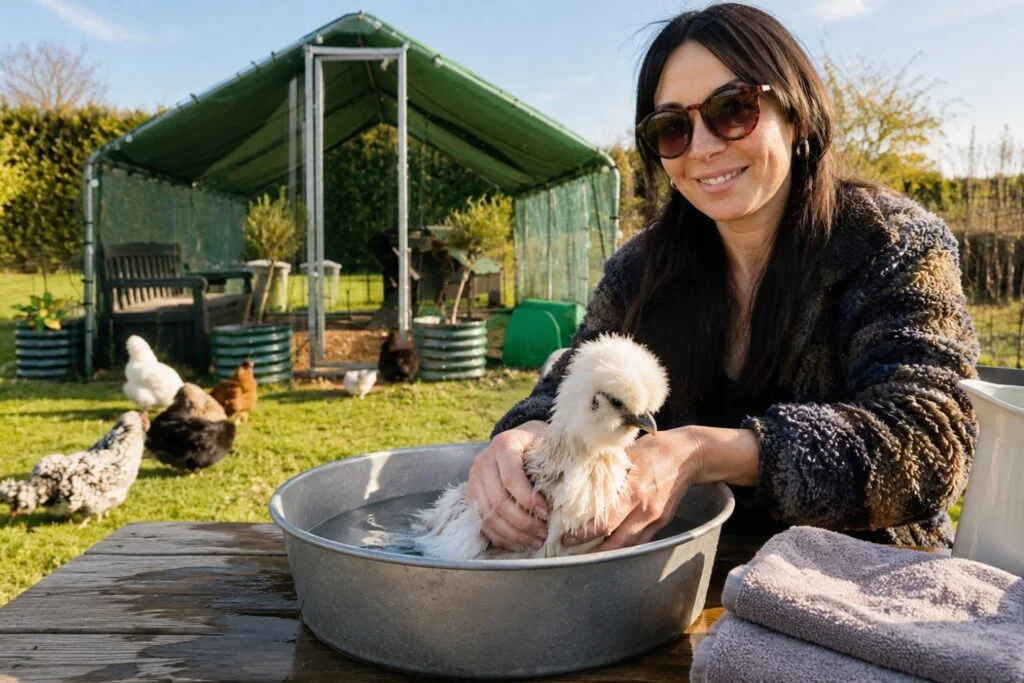
When not to bathe a bird
Do not immerse a weak, distressed or breathless chicken or delay medical care to wash her. Keep water away from the head and avoid inhalation. Do not use harsh household chemicals, unprescribed medicated shampoos or an improvised parasite treatment.
Prepare before necessary cleaning
Work in a calm, appropriate environment with secure support and a plan to keep the bird comfortable afterwards. Have clean towels ready and follow professional instructions. Never leave a bird unattended in water or use deep containers.
Local dirt and foot feathers
Do not pull at scabs, hard crusts or matted feathers. Growing feathers and skin can bleed or be damaged. Limping, swelling, sore skin or material firmly attached to a foot needs assessment before removal is attempted.
Drying and aftercare
A wet bird needs close monitoring and a safe environment until comfortable. Avoid hot air, overheating and exposure to cold or draughts. Seek advice if the bird remains quiet, shivers or has difficulty breathing.
Dust baths and prevention
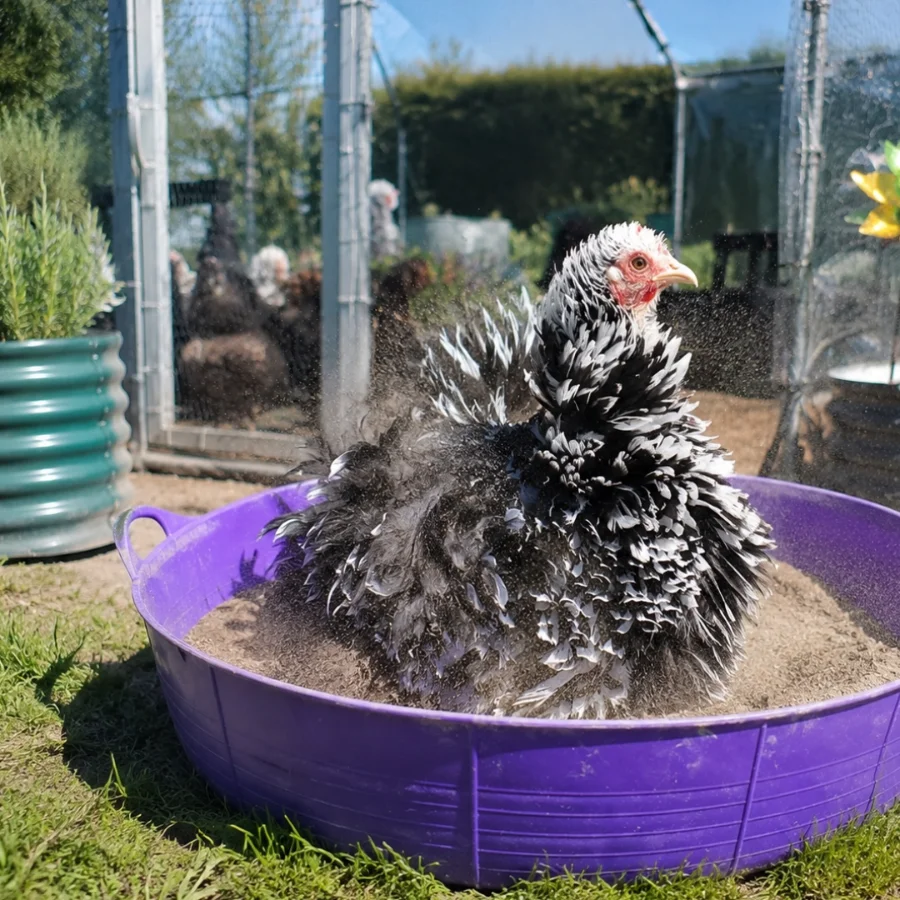
Offer sheltered dry soil or suitable sand and keep nest and floor bedding clean. Improve drainage and inspect the cause of recurring dirt. Dust-bathing supports normal behaviour but does not replace treatment for an infestation.
Flystrike and wounds
Maggots, open wounds, a strong smell or damaged skin require urgent veterinary attention. Do not rely on a routine wash to solve these problems. Inspect vulnerable birds daily and address the underlying cause of soiling.
