Everyday care essentials
Plan dry bedding, safe perches, good ventilation, fresh water and an appropriate complete ration. A suitable home supports your flock’s day-to-day wellbeing.
Explore housing ›
Poultry can be affected by external parasites such as mites and lice, and by internal parasites such as worms. They require different identification and treatment. Itching or poor condition alone does not identify a particular parasite.
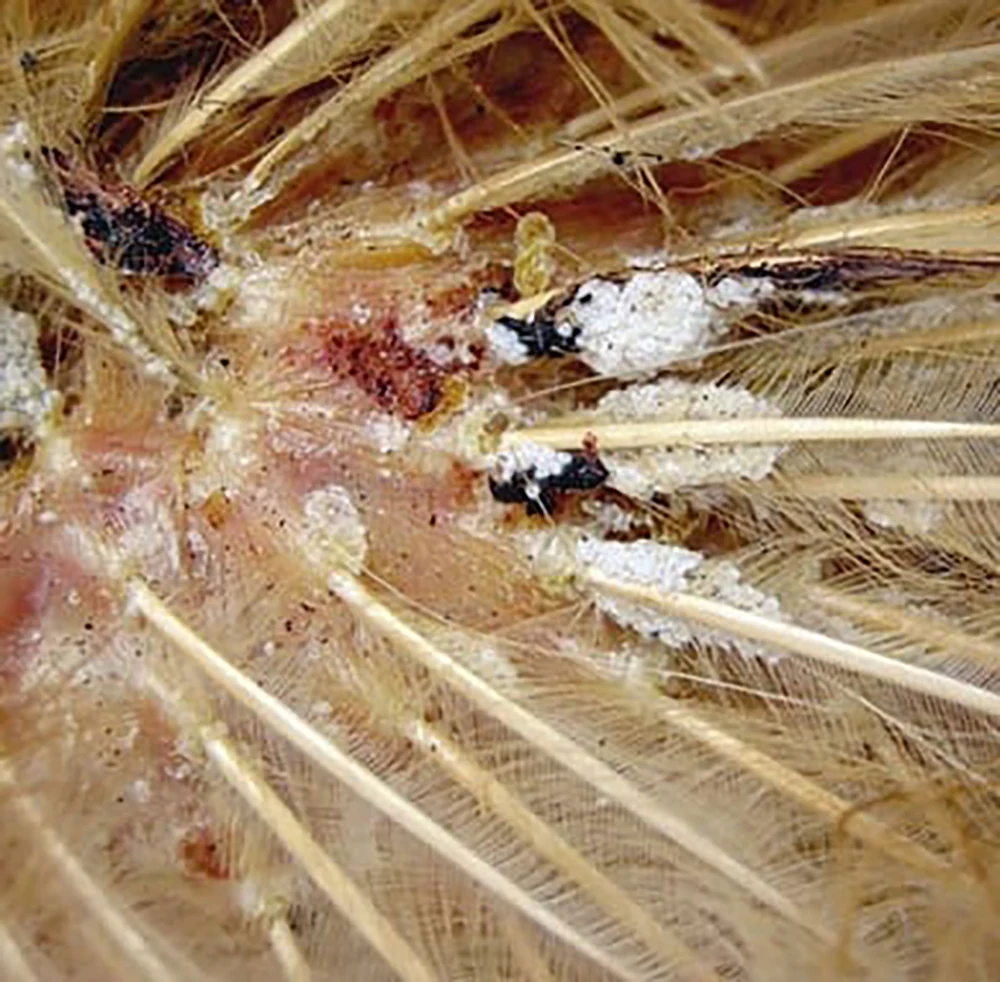
Parasites may arrive with birds or contaminated equipment. Some live mainly on the bird, while red mites can hide in housing and feed at night.
Ask your vet to identify the problem; faecal testing may help assess internal parasites. Examine the housing as well as the birds. Use only a treatment appropriate for poultry and follow the Australian product label or your vet’s directions, including egg and meat withholding periods.
Maintain clean, dry housing, inspect incoming birds and equipment and provide dust-bathing space. A dust bath supports normal behaviour but is not a reliable cure for an infestation. Avoid improvised chemicals or flea products intended for other animals.
Marked weakness, a very pale comb, breathing problems or a heavy infestation need prompt veterinary advice.
Content checked 10 November 2026. General information; not an individual veterinary assessment.
Plan dry bedding, safe perches, good ventilation, fresh water and an appropriate complete ration. A suitable home supports your flock’s day-to-day wellbeing.
Explore housing ›Record changes in appetite, droppings, laying, movement and breathing. Tell the vet about recent arrivals, feed changes and any medicines already used.
Browse the health guides ›If your chicken is unwell, contact a poultry-experienced veterinarian. Take notes on signs, when they started and how many birds are affected. Photos or a short video may help your vet.
For general questions about preparing a home for your birds, browse our care guides or visit our contact page.
Contact usHealth checker ›