
In this guide
What should make up the main diet?
Choose a complete chicken ration for the flock’s life stage and keep clean water available. Chicks, growing birds and laying hens have different needs. Follow feed directions and review the plan if birds are losing condition or not eating normally.
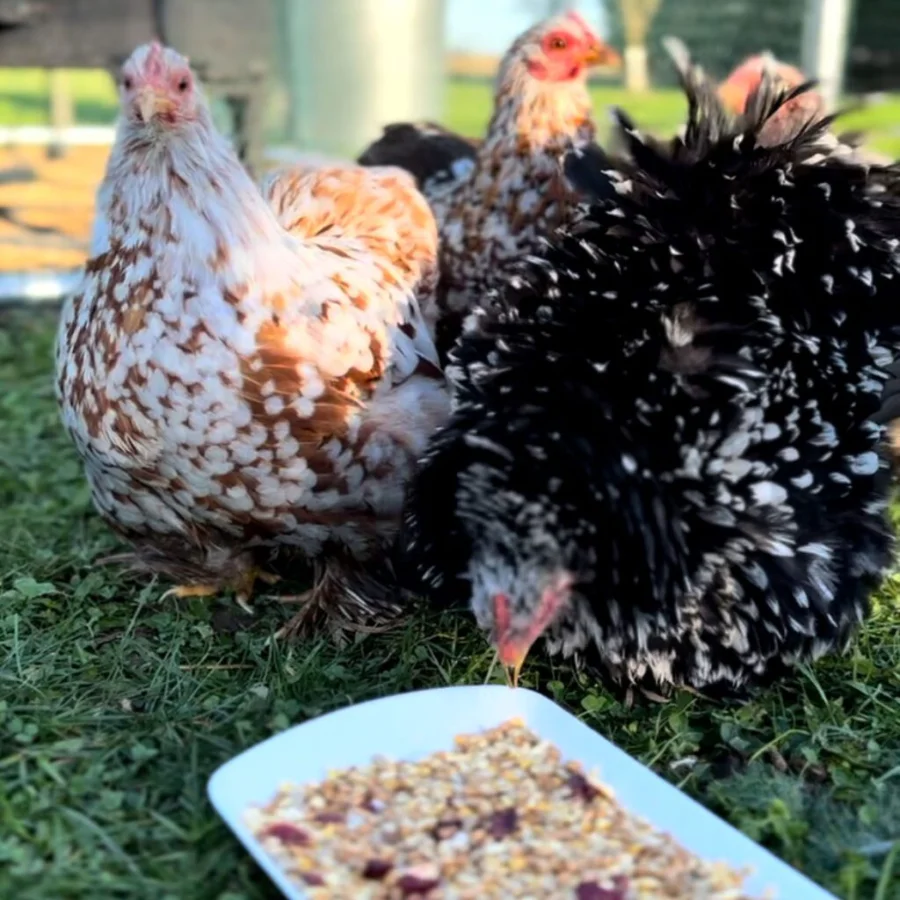
Suitable extras in moderation
Known chicken-safe produce and suitable poultry treats can encourage interest and activity. Offer small quantities and remove leftovers. Rich extras, grain and scraps should not displace the balanced ration or become the only food available.
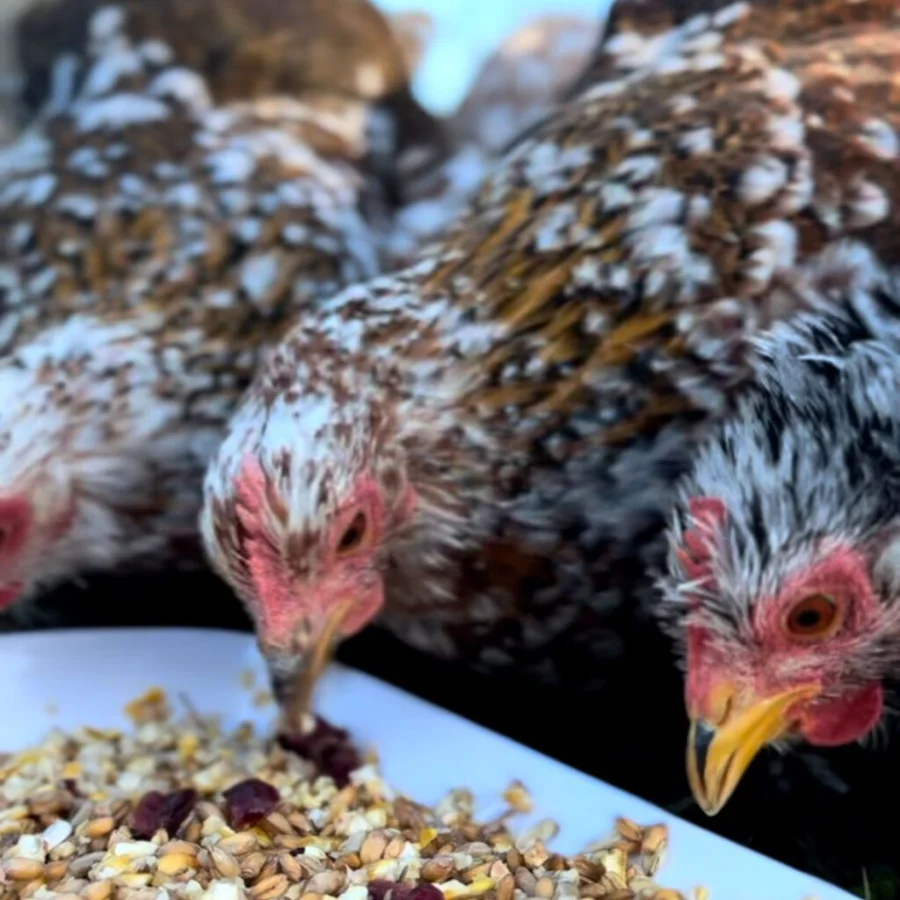
Foraging and variety
Safe foraging offers opportunities to explore and scratch. Check the environment for toxic plants, chemical residues and litter. Access to a garden does not mean hens can obtain their full nutritional requirements without appropriate feed.
What should stay out?
Keep mouldy, spoiled, very salty or contaminated food away from hens. Prevent access to bait, chemicals, chocolate, unknown plants and mushrooms, packaging and string. Check unfamiliar foods rather than assuming a human food is automatically safe for poultry.
Keep food and water hygienic
Shelter feed from rain, store it securely and clear spills that attract rodents. Clean drinkers and feeders regularly. Provide enough access that a dominant bird cannot prevent the rest of the group eating or drinking.
Feeding in Australian conditions
Heat, rain and local conditions affect storage and daily checks. During hot weather, make sure clean water remains accessible and shaded. Ask your vet about a specific health or nutrition concern instead of adding several supplements without a plan.
